|
7 |
|
|
6 |
RESEARCH 01
Direct Recycling for Sustainable Battery Materials
Our research focuses on the direct recycling of spent lithium-ion batteries to recover cathode and anode materials from black mass. We optimize pre-treatment conditions to remove residual impurities and apply froth flotation, which separates active materials based on surface property differences, to enable a closed-loop battery recycling process. Froth flotation is a dynamic, three-phase process involving solids, liquids, and gases. To enhance separation efficiency with fine particles, the process integrates concepts from fluid dynamics, surface chemistry, and chemical reaction engineering. The recovered active materials are directly reused and reassembled into coin cell batteries to verify their performance in new batteries. Their electrochemical performance is evaluated through charge/discharge cycling to assess stability and capacity retention, rate capability tests for kinetics behavior, and electrochemical impedance spectroscopy (EIS) to analyze interfacial resistance. These evaluations demonstrate that the recycled active materials can perform as well as newly manufactured active materials. This direct recycling process contributes to economically and environmentally sustainable recycling technology of spent LIBs.
|
|
5 |
RESEARCH 02
Recycling of waste photovoltaic modules
As global efforts toward achieving carbon neutrality accelerate, the proportion of renewable
energy in electricity generation is steadily increasing. Among various renewable sources, solar
power is gaining particular attention due to its technological maturity and ease of
installation. Currently, crystalline silicon-based photovoltaic (PV) modules are the most widely
used technology, with an average lifespan of approximately 25 years. Consequently, the amount of
end-of-life PV modules is expected to grow exponentially in the coming decades. Developing
technologies for recovering and recycling valuable resources from these waste modules has become
essential. Our laboratory is actively engaged in addressing this challenge by focusing on the development
of eco-friendly resource recovery technologies based on resource circulation. Specifically, we
have conducted research on Strategies for the separation and reuse of PV backsheet materials,
Laser reduction methods for the recovery of silver from PV modules, and Water leaching processes
for the extraction of high-purity silicon.
Through these initiatives, we aim to establish a sustainable resource circulation loop by
efficiently recovering and recycling materials from waste PV modules, ultimately minimizing the
environmental impact of the solar power industry.
|
|
4 |
RESEARCH 03
Atmospheric Leaching for efficient nickel recovery
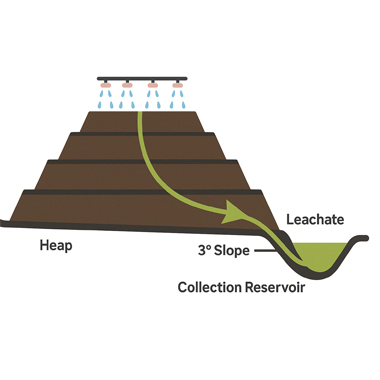
With the rapid growth of the electric vehicle market, the demand for nickel—an essential
component in battery materials—has been increasing significantly. In response, the development
of efficient and sustainable extraction technologies for nickel from laterite ores has become a
pressing challenge. Among various approaches, atmospheric leaching (AL) has gained increasing
attention as a low-temperature, low-pressure method capable of extracting nickel from various
types of laterite ores. Compared to high-pressure acid leaching (HPAL), AL offers advantages
such as lower capital investment requirements and reduced carbon emissions, making it an
attractive alternative for future nickel processing.
Our laboratory is dedicated to developing high-efficiency extraction technologies for nickel
from laterite ores. In particular, we focus on studying leaching behavior based on ore types and
investigating agglomeration improvements to enhance heap leaching performance. Through this
research, we aim to achieve more cost-effective nickel recovery and reduce operational expenses
at pilot scale applications.
|
|
3 |
RESEARCH 04
Hydrometallurgy for High-Purity and High-Efficiency Metal Recovery

As the demand for lithium-ion batteries(LIBs) in electric vehicle increases, it is expected that
a large number of spent LIBs will be generated. This results in instability in the supply of
critical metal resources, highlighting the importance of efficient recycling of spent
lithium-ion batteries. Our research group focuses on developing hydrometallurgical processes to
effectively recover valuable metals such as nickel, cobalt, and manganese.
Specifically, acid leaching and reductive leaching techniques are investigated to selectively
and efficiently extract valuable metals. Subsequently, purification methods including solvent
extraction and precipitation are applied to obtain high-purity metals. These hydrometallurgical
processes are carried out at relatively low temperatures, which reduces energy consumption and
environmental impact while enabling selective metal recovery.
Furthermore, we investigate the reaction mechanisms involved in metal recovery to improve
process understanding. Based on this, we focus on developing adaptable hydrometallurgical
processes for various battery types, contributing to the advancement of resource recycling
systems for next-generation battery industries.
|
|
2 |
RESEARCH 05
Nickel Beneficiation for Laterite Ore

Nickel, which is very crucial metal for industries, has affected the development of mankind. In
particular, the significance of nickel in modern times is bolstered due to rapidly increasing
demands for energy storage systems. There are two major ores which contain nickel: nickel
sulfide ore, and nickel oxide ore which is also known as laterite.
Not a small part of the existing nickel production had relied on nickel sulfide ore since
mineral processing of nickel sulfide is easy to handle. Nickel sulfide ore contains low moisture
and has high hydrophobic property, so nickel concentration can be achieved easily by adopting
froth flotation process. However, the reserves of nickel sulfide are now being depleted and also
are becoming increasingly more difficult to mine owing to the increasing mining depth caused
from nickel sulfide exhaustion in the surface of earth. Therefore recently, the nickel laterite
comes to the fore as the alternative of nickel sulfide since it is more abundant in earth than
nickel sulfide. The laterite not only contains more moisture and lower nickel grade but also has
more complicated crystal structure than nickel sulfide, so it is not easy to process, but the
needs for developing the methods to extract nickel from laterite is becoming main problem since
the international demand for nickel is increasing and the reserves of nickel sulfide is
decreasing.
Our laboratory is now interested in solid state reduction and magnetic separation of
nickeliferous laterite. This process not only can be proceeded in relatively lower temperature
compared to conventional smelting process but also can reduce reagent consumption of following
processes since magnetic separation screens the gangue like SiO2 and Al2O3. Therefore, we are
paying attention on solid state reduction process to reduce the environmental impact of nickel
beneficiation from laterite ore.
|
|
1 |
RESEARCH 06
Mineral Processing and Hydrometallurgy Computational Modelling
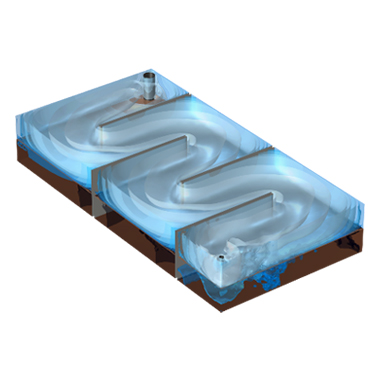
Our laboratory investigates hydrodynamics ranging from laminar flow (hydrodynamics in porous
media occurring in columns or tanks for leaching) to turbulent flow (hydrodynamics in agitated
tanks for flotation). Hydrodynamics in froth flotation are simulated and used in bubble-particle
interactions to predict flotation behavior. Similarly, leaching tanks are simulated to
understand hydrodynamics. Moreover, simulations are used to design equipment and optimize the
processes. Acquired data from simulations and experiments and is used to train machine learning
models, allowing faster computations. Moreover, our laboratory is interested in coupling
hydrodynamics with multiphysics occurring in both leaching and flotation. Some multiphysics
include chemical reactions, transport of chemical species, surface chemistry based on
physicochemical interactions, and bubble-particle interactions. Therefore, we are interested in
combing knowledge from various fields to more realistically simulate our processes.
|

